
PCBA Manufacturing: What Is It and Why Does Automation Matter?

Have you ever wondered how all those tiny electronic components end up working together inside a product?
They are assembled onto a printed circuit board through a process called PCBA manufacturing.
From applying solder paste to placing components, soldering, inspection, and testing, each step needs to be accurate to make sure the final electronic assembly works properly.
What is PCBA Manufacturing?
PCBA manufacturing is the process of assembling electronic components onto a printed circuit board (PCB) to create a functional electronic assembly.
PCBA stands for Printed Circuit Board Assembly. While a PCB is the bare board with electrical connections, a PCBA is the PCB after electronic components have been mounted and soldered onto it.
The typical PCBA manufacturing process includes:
- Solder paste application – Solder paste is applied to specific areas of the PCB.
- Component placement – Electronic components are accurately placed onto the board.
- Soldering – Components are soldered to the PCB to create secure electrical connections.
- Inspection – The assembled board is checked for defects and placement accuracy.
- Testing – The PCBA is tested to make sure it works as expected.
Each step needs to be controlled carefully because even a small error can affect the performance and reliability of the final product.
Why Is Automation Important in PCBA Manufacturing?
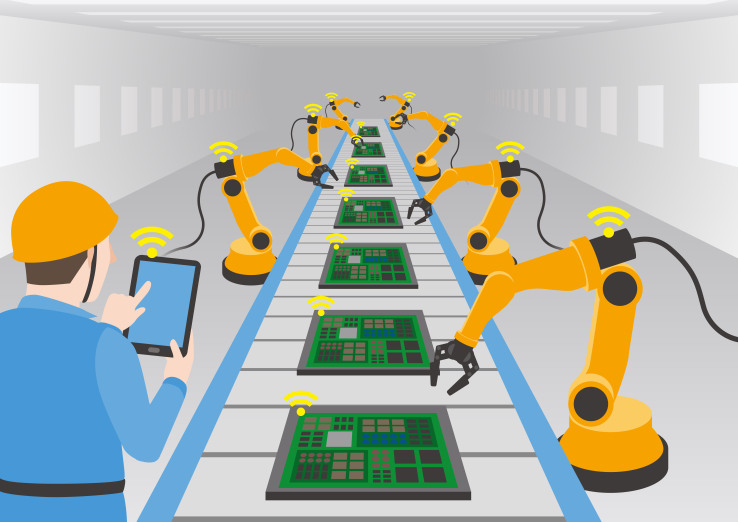
Traditional PCBA manufacturing can involve a lot of manual work. This can make production slower and more labour-intensive, especially when manufacturers need to handle high production volumes.
Manual processes can also be more prone to human error. Inconsistent soldering, component placement, dispensing, or screwdriving can lead to defects and additional production costs.
This is where automation in PCBA manufacturing can help.
Automated systems can make production processes more consistent and repeatable. They can also help manufacturers reduce defects, improve production speed, and maintain more consistent quality.
In simple terms, automation can help manufacturers achieve:
- More consistent production
- Lower risk of human error
- Faster production cycles
- Improved product quality
- Higher production efficiency
- Better process repeatability
Automation does not always mean replacing an entire production line. Sometimes, automating one difficult or repetitive process can already make a noticeable difference.
What PCBA Processes Can Be Automated?
Different stages of PCBA manufacturing can benefit from automation, depending on the product and production requirements.
For example, automation can be used for:
- Automated soldering
- Laser soldering
- Precision dispensing
- Automated screwdriving
- BGA rework
- Inspection
- Robotics and automated handling
The right solution depends on factors such as the product design, production volume, process requirements, and level of precision needed.
How Can Toki Automation Help With PCBA Manufacturing?
Toki Automation provides automation solutions for different manufacturing processes, including PCBA-related applications.
Toki focuses on "bite-sized" automation, where manufacturers can automate one process at a time instead of changing an entire production line at once.
This approach can make automation easier to introduce into an existing production setup. Manufacturers can start with one process, evaluate the results, and gradually expand automation where it makes sense.
It can also help reduce the initial investment needed for automation while giving manufacturers the flexibility to scale their automation over time.
Why Choose Bite-Sized Automation?

Not every manufacturer needs a fully automated production line.
For some manufacturers, the better starting point may be a single process that is repetitive, time-consuming, or difficult to perform consistently.
With bite-sized automation, manufacturers can:
- Start with one production process
- Address specific manufacturing challenges
- Improve process consistency
- Reduce the need for major production line changes
- Scale automation gradually
This makes automation a more flexible option for manufacturers who want to improve their production without completely replacing their existing setup.